
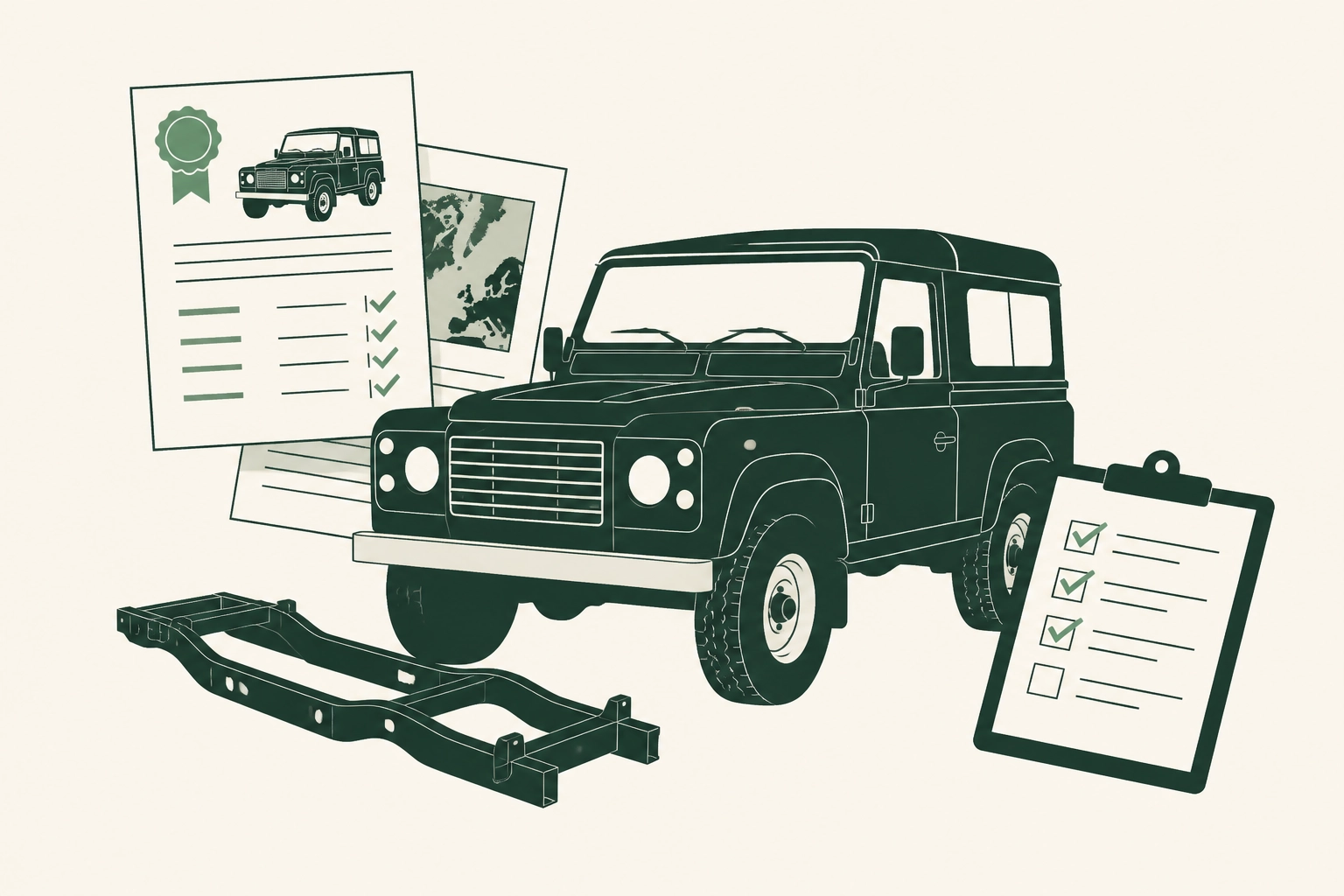
How to Buy a Classic Land Rover Defender: Provenance, Condition and Spec
Every serious search for a land rover defender for sale eventually reaches the same moment: a vehicle that looks right, reads well on paper, and sits within budget. What separates the buyers who walk away satisfied from those who spend the next two years correcting someone else’s mistakes is not luck. It is framework.
The classic Defender, built between 1983 and January 2016, is no longer simply a used vehicle. With the modern 2020 Defender representing a fundamental design departure, pre-2016 examples are increasingly recognised as distinct collectibles, and the market is pricing them accordingly. That shift rewards buyers who understand specification history, demand proper documentation, and assess condition with precision. It penalises those who treat low mileage as a shortcut.
This guide moves through every stage of a well-considered purchase: reading specification as a record of intent, establishing provenance, identifying where classic Defenders structurally fail, matching a vehicle to its purpose, and knowing when to walk away. By the end, you will have a repeatable framework that turns browsing into confident, informed commission.
Understanding the Classic Defender Market
The Land Rover 90 and 110 entered production in 1983 under the names “Ninety” and “One Ten,” working vehicles built without pretension or collectible intent. The Defender name arrived in September 1990, adopted specifically to distinguish the model from the incoming Discovery. Production continued largely unchanged for another 26 years, until the final example rolled off the Solihull line in January 2016. Then, in 2020, Land Rover launched a fundamentally different vehicle sharing only a name with its predecessor. That departure matters: it drew a definitive line under the classic era, and the market has been recalibrating ever since.
Pre-2016 Defenders are now recognised by serious buyers and collectors as distinct from everything that came before or after. They are no longer simply old Defenders; they are the last of an unbroken lineage, and pricing reflects that shift.
What the numbers actually tell you
Current listings on carandclassic.com span from £855 to £154,990, with an average sitting around £46,102. That average is close to meaningless without context. The spread exists because the market is not pricing one vehicle; it is pricing dozens of distinct variants, conditions, and histories under a single model name.
Earlier workhorse examples, typically high-mileage utility vehicles with patchy documentation, start from around £7,000. A recent 2.2 TD4 in reasonable condition commands roughly three times that figure. A properly documented, expedition-prepared example with coherent specification history can command significant premiums at the upper end of the documented range. The Nat Geo Spec illustrates precisely what separates a vehicle at that end of the market: it is not simply specification, it is the completeness of the story behind it.
The mental model most buyers get wrong
Browsing a “used defender” or “old defender for sale” listing with the same framework you would apply to any used 4×4 is a structural mistake. The classic Defender market has moved. Buyers are no longer simply comparing mileage and service stamps; they are assessing provenance, specification coherence, and build intent as primary value drivers.
A high-mileage Defender with documented history and a purposeful specification may be worth considerably more than a low-mileage example with an incomplete paper trail and mismatched components. Understanding that distinction, before you begin viewing vehicles, is the foundation on which every other buying decision rests.
Reading Specification as History
Once you understand where the market sits, the next question is more exacting: what, precisely, are you looking at?
Specification is not a list of features. On a classic Defender, it is a chronological record, and reading it correctly tells you more about a vehicle’s history than most sellers will volunteer.
Engine generation is the most reliable place to start. The 200Tdi brought meaningful improvements in power and refinement over earlier units. The 300Tdi followed with further drivetrain development and improved emissions behaviour. The Td5 shifted the Defender into a new category of electronic management complexity. The TD4 ‘Puma’ arrived in the final production phase, using a unit sourced from a different supplier, a capable engine but one that signals a different parts ecosystem and a different ownership culture entirely. Each generation represents a distinct era, a distinct capability profile, and a distinct relationship with the independent specialist network. A buyer who does not know which engine they are purchasing is not yet ready to purchase.
Wheelbase shapes everything about how a Defender works. The 90 is compact, nimble, and load-limited. The 110 carries more, seats more, and handles sustained overland work more comfortably. The 130 (originally designated the 127) is a third distinct variant. None of these is objectively superior; each is correct for a specific use. Choosing on aesthetics alone produces expensive regret, particularly when the intended use involves genuine weight, distance, or terrain.
Coherence matters more than any individual component. A Defender maintained sympathetically within its original specification tells a clean, legible story. A vehicle assembled from mismatched upgrades across three decades tells a different one, and that story is harder to verify, harder to value, and harder to trust. An original 300Tdi with period-correct equipment and consistent service history outpoints a similar vehicle with a newer engine swap and no paperwork, even if the individual components in the latter are technically superior.
Factory options and period-correct accessories reinforce this point. Original Wolf military equipment, period expedition roof racks, and military-specification fitments carry genuine provenance weight that aftermarket replicas cannot credibly reproduce. These details are increasingly difficult to authenticate, which is precisely why they matter.
The distinction between modifications that serve a Defender’s intended capability and those that simply accumulate is where informed buyers separate themselves. Upgraded suspension matched to load, period-appropriate lighting, and properly integrated auxiliary fuel all make coherent sense. Bolt-on additions without documented rationale do not, and they frequently obscure what the vehicle was before someone started spending on it.
When you are searching for a land rover defender for sale, filter first by engine generation and wheelbase. Price comes after. A vehicle that fits your use and holds a coherent specification history is worth paying properly for. This is part of what more than old Land Rovers means in practice: every selection decision begins with specification integrity, not asking price.
The Provenance Framework: What Documentation Actually Tells You
Specification coherence tells you what a Defender is. Provenance tells you what it has been. The two are related but distinct, and conflating them is one of the more common mistakes buyers make at this stage of the process.
Provenance is not a service history. It is the complete, verifiable narrative of a vehicle from first registration to the point of sale: every keeper, every change of use, every documented decision made about that specific chassis. A thick folder of service stamps confirms maintenance intervals; it does not confirm who owned the vehicle, under what conditions it was operated, or whether the history presented is coherent from one end to the other.
What to Request Before Viewing
The minimum documentary request for any UK-registered Defender is the V5C logbook, a full MoT history (accessible free via the government’s online MOT history checker), and any specialist service records. The V5C confirms registered keepers, registration number, VIN, and engine details. The MoT history adds a timeline of annual condition snapshots, mileage progression, and recurring advisories that a curated service folder cannot replicate.
Gaps in this record are not automatically disqualifying. A vehicle that spent years on a private estate, within a military fleet, or in overseas operation may have legitimate breaks in its civilian paper trail. What matters is whether those gaps can be explained credibly, with corroborating documentation, rather than simply asserted.
Heritage Certificates and Build Records
For ex-military, ex-utility, or export-return vehicles, original registration documents and factory build records carry particular weight. Heritage certificates, available through the British Motor Museum archive, can confirm factory specification and original market of supply for many classic Land Rovers, providing independent verification of what the vehicle was when it left the production line.
Ex-military Defenders deserve specific consideration. Many were maintained to exacting mechanical standards throughout their service life, but the provenance story typically includes identification marking removal, modifications made to military specification, and an ownership gap between Ministry of Defence disposal and civilian re-registration. That gap is normal and explainable; what matters is whether the civilian history from re-registration onwards is clean and documented.
Why the Origin Story Carries Investment Weight
A Defender with a coherent, documented history commands a meaningful premium over a comparable specification vehicle with ambiguous paperwork. As the classic Defender market moves from working transport to collectible, that premium is widening. Buyers seeking Land Rovers with provenance and purpose are increasingly sophisticated, and the vehicles with the clearest narratives are the ones that hold and appreciate in value.
A private buyer reviewing documents alone is working at a disadvantage. A specialist with genuine sourcing experience reads provenance critically, identifying inconsistencies between keeper records, mileage progressions, and physical condition that are not visible to someone encountering these documents for the first time.
Condition Priorities: Where Classic Defenders Actually Fail
Provenance tells you where a Defender has been. Condition tells you what that journey has done to it. The two assessments are related but distinct, and no amount of clean paperwork compensates for structural compromise.
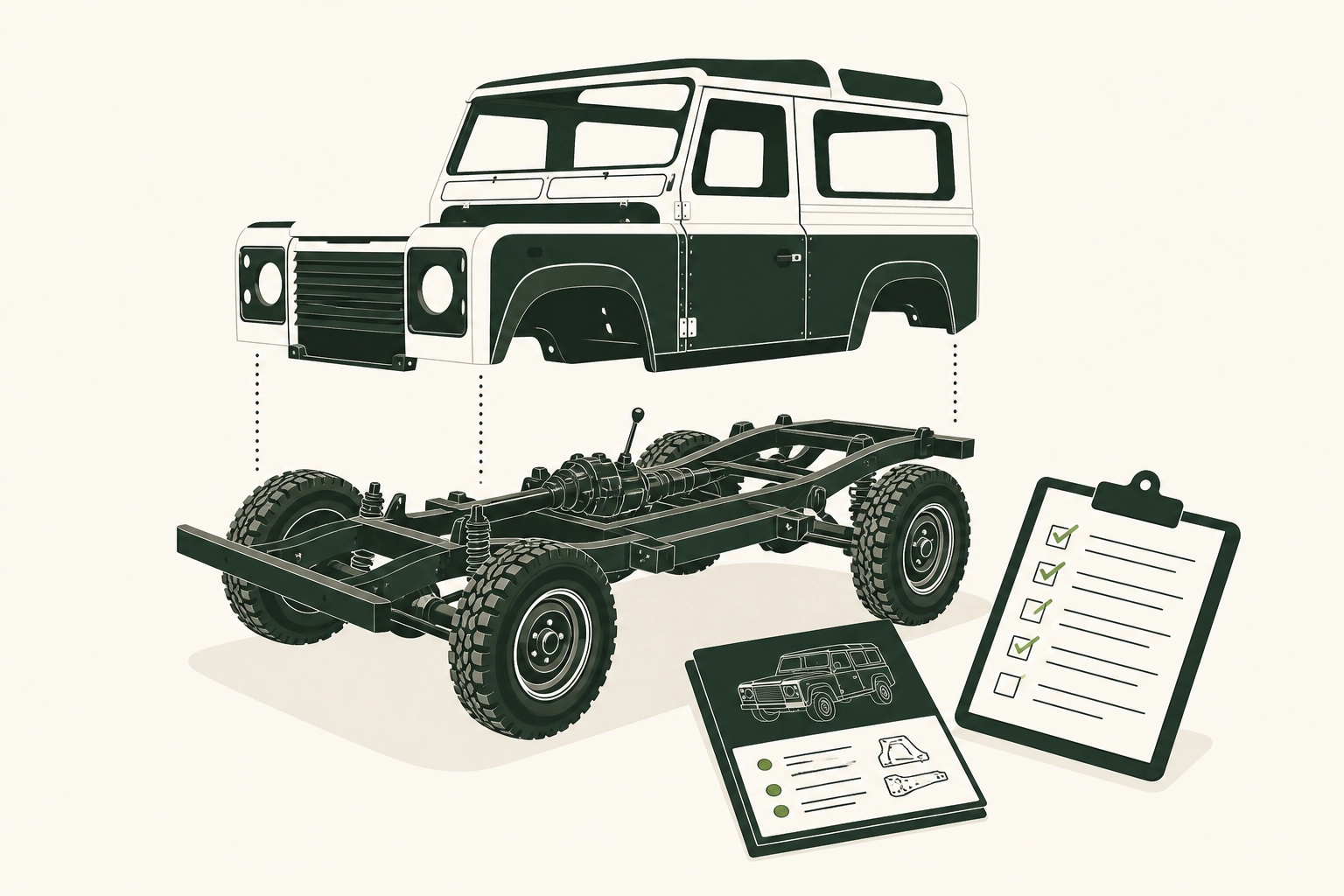
Chassis and bulkhead corrosion are the primary threats to any classic Defender, and both demand serious attention before purchase. These are load-bearing structures; remediation is complex, and rot that has taken hold rarely stops where it is visible. Every model year is susceptible. Age alone does not determine severity; use, climate exposure, and maintenance history all contribute.
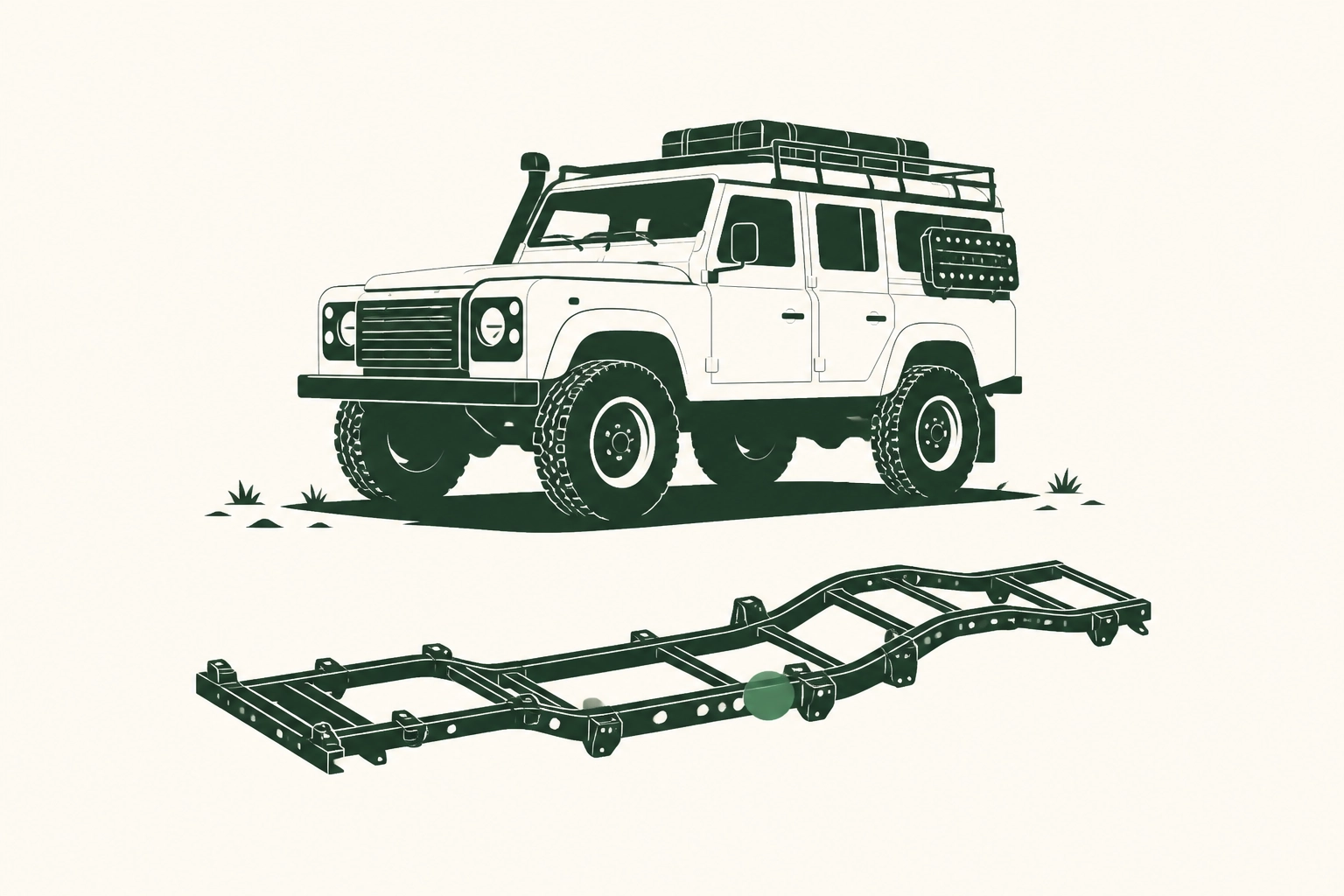
A galvanised chassis replacement can be supplied and fitted for under £5,000, which is worth keeping in mind. A vehicle requiring that work is not automatically a write-off, but the cost must be factored into your total acquisition figure before negotiation, not after.
Bulkhead rot is the more dangerous of the two, precisely because it hides. Filler, fresh paint, and carpet lining routinely conceal advanced corrosion at the footwells, the base of the A-posts, and the corners where the bulkhead meets the sill. These are the areas to probe physically, and the bulkhead-to-chassis junction points are structurally significant. Compromised examples can pass a visual inspection that conceals serious underlying failure.
Photographs cannot tell you any of this. Any purchase that is being treated seriously requires either an in-person inspection or a pre-purchase inspection (PPI) conducted by a qualified Land Rover specialist, ideally on a ramp with the underside fully visible. This is not optional due diligence; it is the minimum standard for a vehicle in this price bracket.
Beyond the structure, the inspection checklist should include: transfer case and differential condition, assessed for wear and oil contamination; the wiring loom, particularly on Td5 models where the engine management system is more electronically complex than earlier generations; brake and clutch hydraulics for leaks, softness, or degraded components; and the condition of the roof seams and body seals, which are a persistent weak point on ageing examples.
A cosmetically exceptional vehicle warrants more scrutiny, not less. A thorough preparation job can conceal corrosion behind fresh underseal, new trim, or a recent respray. If a vehicle looks too good for its age or price, the structural condition requires a correspondingly harder look. The quality of the visual presentation is not evidence of the quality of what sits beneath it.
Matching Your Purchase to Its Purpose
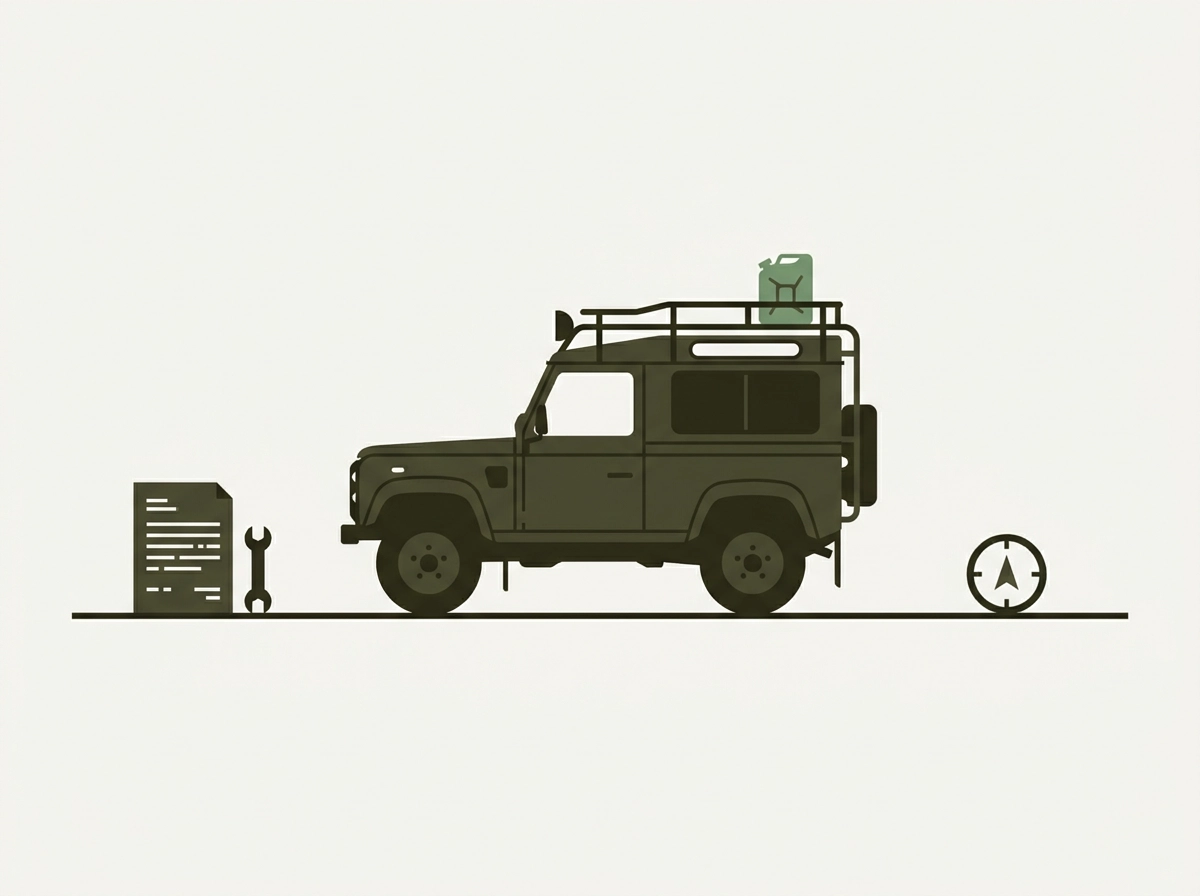
Structural condition determines whether a Defender can be saved. Use case determines whether it should be yours.
The most expensive mistake in this market is not overpaying for a sound vehicle; it is buying the right condition in the wrong specification. A concours-condition 90 with documented originality is genuinely valuable, but it is the wrong vehicle for sustained off-road expedition use. Equally, a fully built 110 with integrated recovery points, auxiliary fuel, and a reinforced electrical system represents poor value when the intended role is preserved collection or occasional country road use. The vehicle and the purpose must be matched before any other judgement matters.
Three distinct categories cover most classic Defender purchases.
An expedition-prepared example requires more than a snorkel and a roof rack. Genuine readiness means a drivetrain with a verified service record capable of sustained load across remote terrain, auxiliary fuel capacity sized to actual range requirements, recovery points welded into the chassis rather than bolted to body panels, and an electrical system robust enough to support navigation, communication, and auxiliary power draws simultaneously. The 300Tdi is well regarded for reliability in sustained off-road use.
A preserved original operates on entirely different logic. Its value story is built on what has not changed: original specification, documentation completeness, and cosmetic integrity. Every modification requires explanation, and unexplained changes subtract rather than add. For a collector-grade vehicle, provenance and originality carry as much weight as mechanical condition.
A practical working Defender sits between these poles. Mechanically sound, sympathetically maintained, capable of regular or daily use, but without the documentation premium of a collector example or the full investment of an expedition build. For many buyers, this is the most honest category, and it is well served in the current market.
Before viewing any vehicle, define your use case in writing. How many miles per year? What terrain? What payload? What climate? Does the vehicle need to be genuinely self-sufficient, or will it always be within range of support? These answers should filter every defender for sale listing you engage with. Viewing vehicles without this clarity wastes time at best and leads to expensive rationalisation at worst.
Defining the Specification sets out how this alignment works in practice. Pods Overland’s inventory is curated around exactly this framework; vehicles are sourced and prepared according to a defined purpose, which means the use-case matching is already resolved before a buyer makes contact. That removes a significant layer of uncertainty from the process and focuses the conversation on fit rather than investigation.
When to Walk Away: Red Flags by Category
Knowing what you want from a Defender is only half the discipline. Knowing when a specific vehicle does not meet the standard is the other half, and it is where most buyers lose money.
Seller Behaviour
A seller who cannot account for ownership gaps, who presents paperwork that contradicts the vehicle’s stated history, or who resists a pre-purchase inspection is not an inconvenience. Resistance to independent inspection is the single clearest signal that the vehicle has something to conceal. Walk away before investing further time.
Structural Red Flags
Inspect the bulkhead base and footwells for visible filler or patched repair. Fresh underseal on an otherwise aged and patinated chassis deserves immediate scepticism; it is rarely cosmetic. Misaligned body panels, particularly around the A-posts or door apertures, suggest prior impact that may not appear in the MOT or service record. Cross-reference the chassis number against the V5C; any discrepancy is a hard stop, not a negotiating point.
Specification Red Flags
An engine swap is not automatically a problem, but it requires documentation and a coherent rationale. A 200Tdi replaced with a 300Tdi as part of a sympathetic rebuild is a different proposition from an undocumented engine change with no paperwork trail. Equally, a build that mixes era-specific components without purpose, a Td5-era interior grafted onto a 300Tdi chassis with no explanation, for instance, points to parts-bin assembly rather than considered preparation. Aftermarket modifications that have removed or compromised original mounting points reduce both structural integrity and future options.
Pricing Red Flags
With classic Defenders now listed from £855 to nearly £155,000, the market is transparent enough that genuine undervaluation is rare. A vehicle priced significantly below comparable examples for its stated specification and condition is almost always priced that way because the seller is aware of a liability they have chosen not to disclose. Treat a low price as a prompt for additional scrutiny, not as good fortune.
Project vs. Problem Vehicle
The distinction matters enormously to total acquisition cost. A project vehicle has identifiable, costed, remediable work ahead of it; the liabilities are known and priced in. A problem vehicle has concealed history, undisclosed structural compromise, or unknown liabilities that will compound through both time and budget. Sellers do not always make this distinction clearly, and some do not make it honestly.
Walking away from a vehicle that cannot meet documentation and condition standards is not a failure of judgement. It is the process functioning correctly.
Why Working With a Land Rover Specialist Changes the Outcome
Knowing when to walk away is a skill. Knowing where to look in the first place is a different discipline entirely, and it is where a genuine specialist earns their position in the process.
Sourcing depth is the first and least visible advantage. A specialist with established relationships in the classic Defender market sees vehicles before they reach open listings. They know ownership chains, can trace a vehicle’s history through prior transactions, and apply a consistent assessment standard built across many purchases. A private buyer viewing their third Defender has limited reference points. A specialist who has assessed hundreds has a calibrated baseline that cannot be improvised.
Curation is risk transfer, not convenience. When a specialist commits to a vehicle’s provenance and condition, they are absorbing the uncertainty that would otherwise sit with the buyer. You are not purchasing a probability; you are purchasing a documented position that someone with genuine expertise has stood behind. That distinction carries real weight when the vehicle costs £30,000, £60,000, or more.
At Pods Overland, every vehicle in the collection of carefully sourced and prepared Land Rovers is selected against the same standard the company would apply to a vehicle it intended to use itself. Defenders and Range Rovers are sourced, restored, and prepared with a specific focus on provenance, character, and purpose. If a vehicle’s history does not hold up, or its specification does not cohere, it does not enter the inventory regardless of its cosmetic appeal.
For US buyers, the practical advantage extends further. Navigating US import requirements, understanding eligibility conditions, and assembling the documentation needed to support a clean American title is a process with genuine failure points. A UK-based specialist who understands these requirements from both sides of the transaction reduces that risk considerably, and removes the burden of learning import compliance alongside the already demanding task of assessing the vehicle itself. You can learn more about Pods Overland’s approach and the philosophy behind how vehicles are chosen and prepared.
The right specialist relationship is advisory. The goal is a vehicle matched to your use, your budget, and your realistic appetite for ongoing maintenance, not the vehicle that is easiest to move.
The Framework in Practice: Buying With Confidence
The specialist relationship established in the previous section is only as valuable as the framework you bring to it. That framework has five components, and applying all five consistently is what separates a sound acquisition from an expensive lesson.
Start with purpose, not listings. Before engaging with any vehicle, define precisely what you need it to do. An expedition-prepared 110 built for sustained off-road use, a preserved original 90 held as a collector piece, and a mechanically honest workhorse for regular practical use are three distinct purchases with different evaluation criteria. Letting purpose filter your search prevents the most common and costly mistake in this market: buying the wrong vehicle for the right money.
Treat provenance as a threshold condition, not a negotiating point. A vehicle without a credible, verifiable paper trail carries unknown liabilities. MoT history, V5C continuity, and specialist records are threshold conditions, not negotiating points.
Prioritise structure over surface. Chassis and bulkhead condition, assessed in person, on a ramp, determine whether a Defender remains viable long-term.
Read specification as a narrative. Coherent specification, engine, wheelbase, accessories, and modifications forming a legible account of the vehicle’s history, signals honest ownership.
Apply a consistent standard throughout. The quality of the framework applied before purchase determines the outcome more reliably than any individual inspection or negotiation. Working with a specialist who can hold that standard across sourcing, provenance verification, condition assessment, and preparation removes the gaps where expensive mistakes are made.
Every vehicle in Pods Overland’s collection is evaluated against precisely this framework. That is not a convenience; it is the basis on which confident ownership begins.
Conclusion
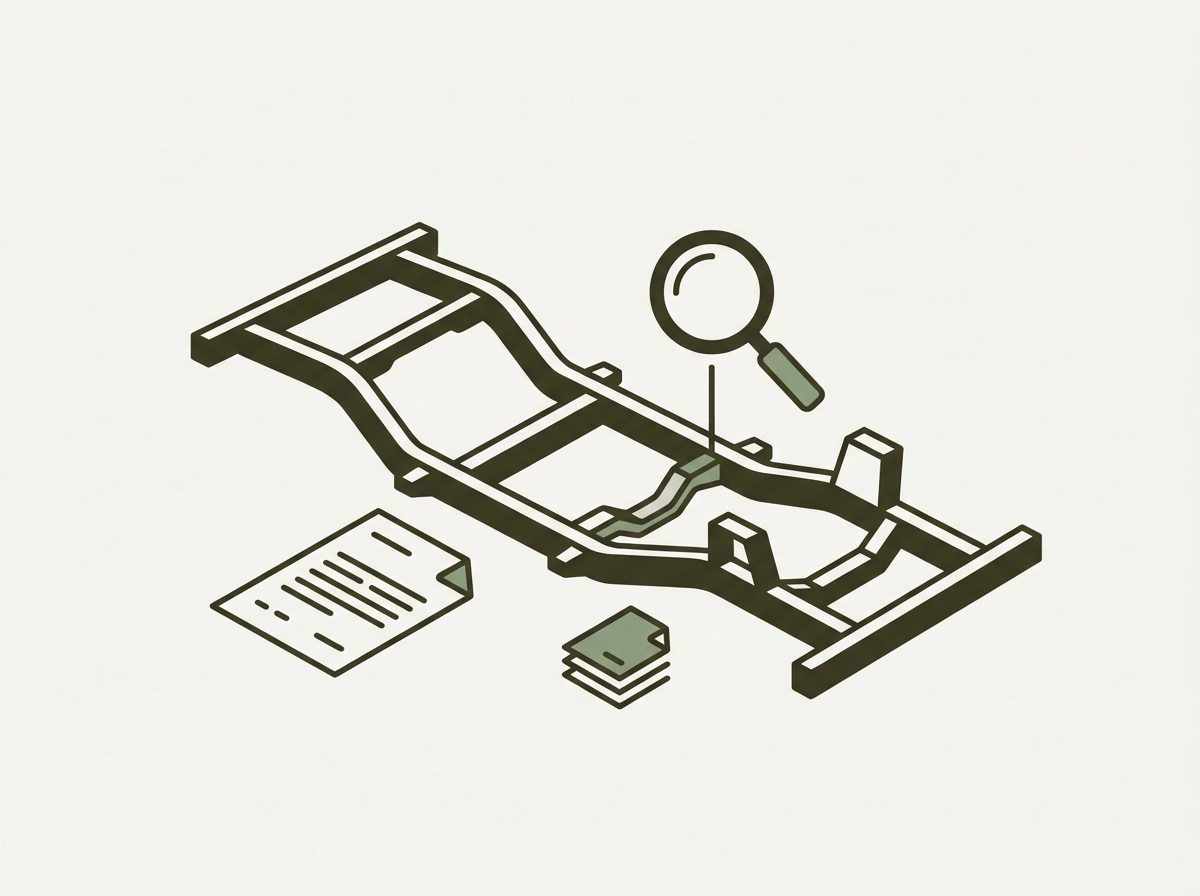
Buying a classic Defender well comes down to four disciplines applied consistently: understanding the market you are entering, reading specification as a record of honest ownership, assessing structural condition before cosmetic presentation, and verifying provenance through documentation rather than assumption.
These are not complex principles, but they require patience and a willingness to walk away when the evidence does not hold together.
If you are ready to begin your search, start with the framework before you start with the vehicles. Define your purpose, establish your condition priorities, and identify the red flags you will not compromise on.
Pods Overland sources, verifies, and prepares classic Defenders against precisely this standard. Browse the current collection, or get in touch directly to discuss what you are looking for. Confident ownership starts with the right process, and that process starts here.

Leave a Reply